
The honest answer is yes, but with limits that are worth understanding before you spend any money. An insulated roller garage door cuts the heat escaping through the largest opening in your garage and stops the draughts that make the space feel raw in winter. What it cannot do is turn an unheated, uninsulated garage into a warm room. This guide explains how the insulation works, where garages really lose heat and who gets the most from an upgrade.
How Foam-Filled Aluminium Slats Work
A roller garage door curtain is made up of horizontal aluminium slats that interlock and roll around a barrel above the opening. On an insulated door, each slat is double walled: two aluminium skins with high-density foam filling the gap between them. Aluminium on its own conducts heat quickly, so a bare metal door gets as cold as the outside air. The foam core slows that transfer right down, which means far less warmth passes through the closed curtain.
Rollrite doors come in two profiles. The 55mm slat carries a 12.5mm high-density foam core and suits single garages with openings up to 2.6 metres wide. The 77mm slat is a heavier section with 18mm of insulation, built for double garages and exposed openings up to 5 metres, where it also gives better wind resistance.
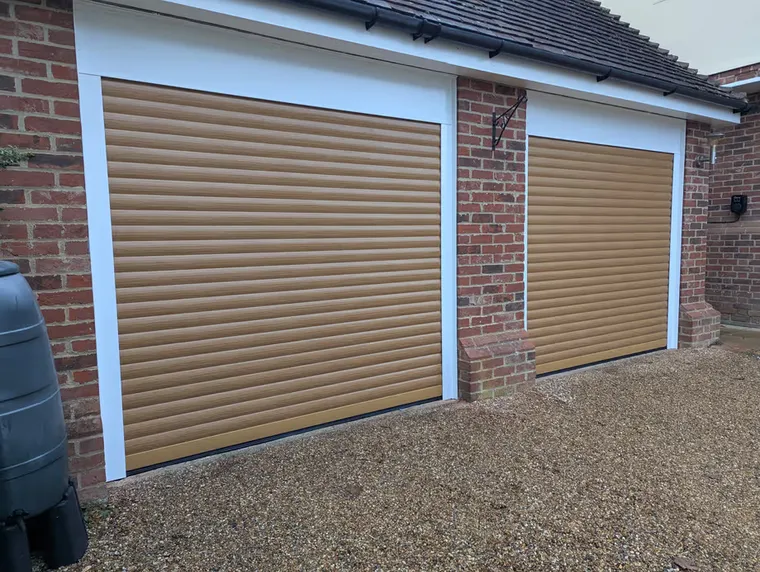
Where a Garage Actually Loses Heat
Think about the fabric of a typical garage. The walls are often a single skin of brickwork, the roof may be a thin sheet with no insulation underneath, and then there is the door: by far the biggest single opening in the structure.
An old single-skin metal door is a poor barrier in two ways. The sheet itself is thin metal that sits at outside temperature, and the gaps around its edges let a steady stream of cold air move through the garage. Replace it with an insulated, made-to-measure roller door and you deal with the worst offender in one go: the curtain resists heat loss and the seals close the gaps.
The rest of the structure still matters, though. A door upgrade removes the biggest weakness, but heat will keep finding its way out through uninsulated walls and roofs. That is why we are careful about what we promise.
What You Can Realistically Expect
An insulated roller door makes a garage noticeably less cold in winter, mainly by stopping draughts and taking the chill off the largest surface in the room. It also helps keep the space cooler on hot summer days. What it will not do is bring an unheated garage up to living-room temperature. For that you would need insulated walls and a decent roof plus some form of heating; the door is simply the most sensible first step because it addresses the biggest opening.
| Garage type | Difference you will notice | Why |
|---|---|---|
| Integral garage (under or beside living space) | Large | The garage shares walls or ceilings with heated rooms, so a warmer garage means less heat pulled out of the house. |
| Attached single-skin garage | Moderate | Draughts drop sharply once the biggest opening is sealed, though heat still escapes through the walls and roof. |
| Detached, uninsulated garage | Modest but useful | Expect draught control and a steadier temperature rather than genuine warmth. |
If you are weighing up an upgrade, our roller garage door installation page explains the full process, from the free survey through made-to-measure manufacturing to fitting, which is usually completed within half a day.
Not sure how much difference an insulated door would make to your garage? A free survey gives you straight answers and a fixed written quote.
Book a Free SurveySide Benefits You Notice Every Day
Warmth gets the attention, but day to day, many customers notice three other improvements first.
- Quieter operation. The foam core damps vibration as the curtain rolls, so the door runs with a low hum rather than the clatter of bare metal on metal.
- No rattle in the wind. Single-skin doors drum and bang in gusty weather. A foam-filled curtain held snugly in its guide runners barely moves.
- Lower condensation risk. Condensation forms on cold surfaces, and an uninsulated metal door is usually the coldest thing in the garage. An insulated curtain keeps its inner face closer to room temperature, which means less moisture running down the door and dripping onto whatever is stored beneath it.
Brush Seals and Guide Runners
The slats do the headline work, but the sealing around the edges matters just as much for how warm the garage feels. The curtain runs in aluminium guide runners on each side of the opening, and those runners are fitted with brush seals that close the gap between the curtain and the frame. A rubber seal on the bottom slat compresses against the floor when the door closes.
Together these seals block the draughts an old single-skin door lets through, and they help keep out dust, leaves and insects as well. Because every Rollrite door is made to measure, the curtain fits your opening properly rather than leaving the gaps an approximate off-the-shelf size would.
Who Benefits Most from an Insulated Door
Some garages get more from insulation than others.
- Integral garages. If your garage sits under a bedroom or beside a living room, its temperature affects the rooms around it. A cold garage pulls heat from the house through shared walls and ceilings, so insulating the door helps the whole home, not just the garage.
- Garages used as gyms, workshops or utility spaces. Anywhere you spend time, temperature is comfort. A draught-free, less cold space is far easier to train or work in through the winter months.
- Storage of anything sensitive. Tools, bikes, paint and stored furniture all fare better with less condensation and a steadier temperature.
Integral garages are especially common on newer developments, and they are one of the most frequent reasons homeowners ask us about roller garage doors in Witham and the surrounding mid Essex towns.
Getting a Price for Your Garage
Installed prices for our insulated roller doors typically run from £1,275 to £4,000 depending on the size of the opening, the slat profile and the options you choose. Every door includes the electric motor, two remote controls, a safety edge, automatic locking and a manual override for power cuts.
For a guide figure before you speak to anyone, our garage door cost calculator gives an instant estimate based on your door size and specification. When you are ready, a free on-site survey confirms the exact measurements and gets you a fixed written quote with no obligation.